discrete and continuous
Discrete data takes separate values (number of siblings). Continuous data can be any value in a range (height, time), and is rounded when recorded.
Data and chance · The words and methods from the lessons, with an example of each.
Discrete data takes separate values (number of siblings). Continuous data can be any value in a range (height, time), and is rounded when recorded.
Sort first; the middle value, or halfway between the two middle values for an even count.
There can be two modes, or none. The range is a simple measure of spread.
Tens as stems, units as leaves in order; include every stem, even with no leaves; give a key.

Ask a question data can answer, plan the variable and a fair sample, collect and display the data, describe its shape, centre and spread, then report the answer with its limits.
Add the values, then share equally. An outlier pulls the mean towards it.
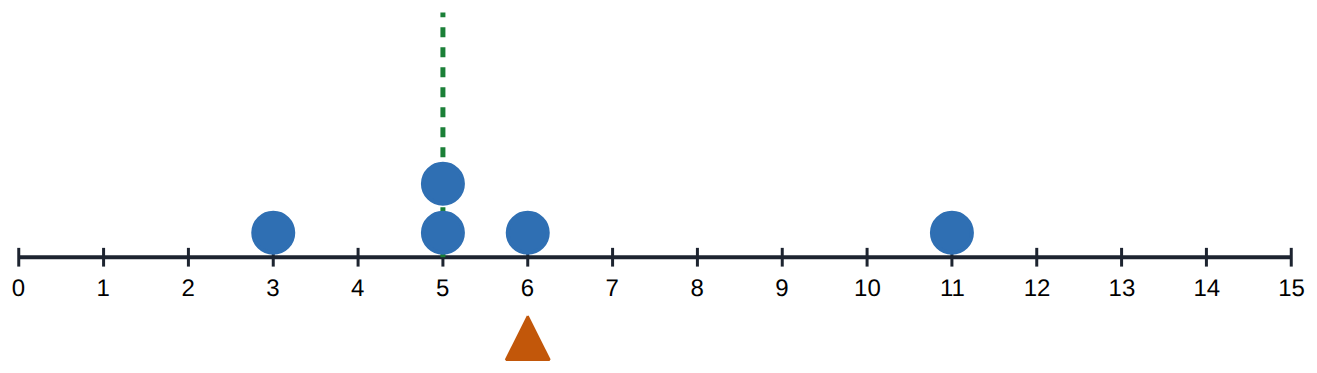
With an outlier, the median describes a typical value better than the mean. Without, the mean uses every value. For 'most common', use the mode.
Describe shape (symmetrical or skewed, clusters, gaps, outliers), centre and spread. Compare both centre and spread, with numbers, in context.
