census and sample
A census is exact but slow and costly; a sample estimates. An experiment changes something on purpose; an observation watches.

Data and chance · The words and methods from the lessons, with an example of each.
A census is exact but slow and costly; a sample estimates. An experiment changes something on purpose; an observation watches.
Simple random: same chance for all. Systematic: every kth from a random start. Stratified: at random within each group, in proportion. Convenience and quota: someone chooses, so they can be biased.
Fair samples from one population give different results by chance. Their results scatter around the population's value, closer for bigger samples.

Bias pushes a result one way: sampling bias (who is asked), response bias (how they are asked), measurement bias (the tool). A bigger sample doesn't fix it.
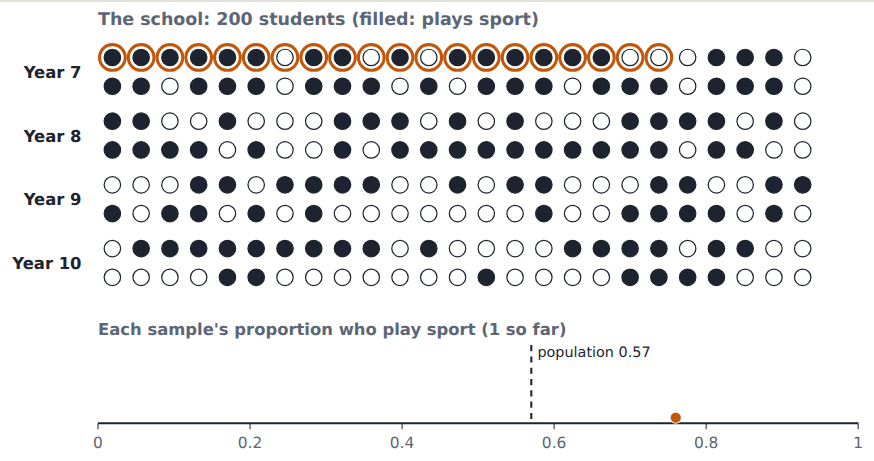
Describe the shape (symmetric or skewed), the centre (mean, median) and the spread (range), then estimate the population with the method and size. Primary data you collect; secondary data others collected.
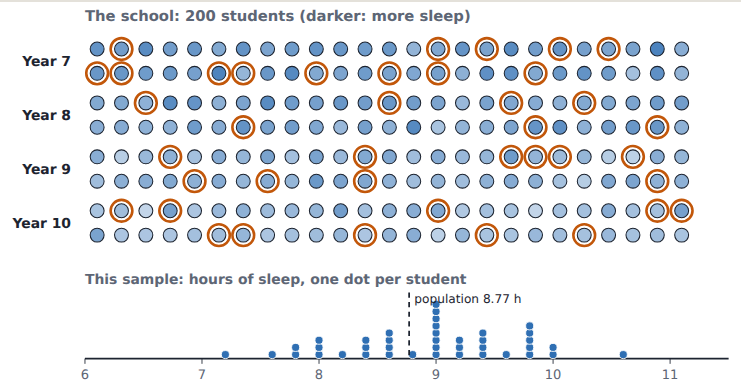
Infer only about the population sampled, give an estimate, and say how sure you are (size and method). Collect data with consent and anonymity.