gradient
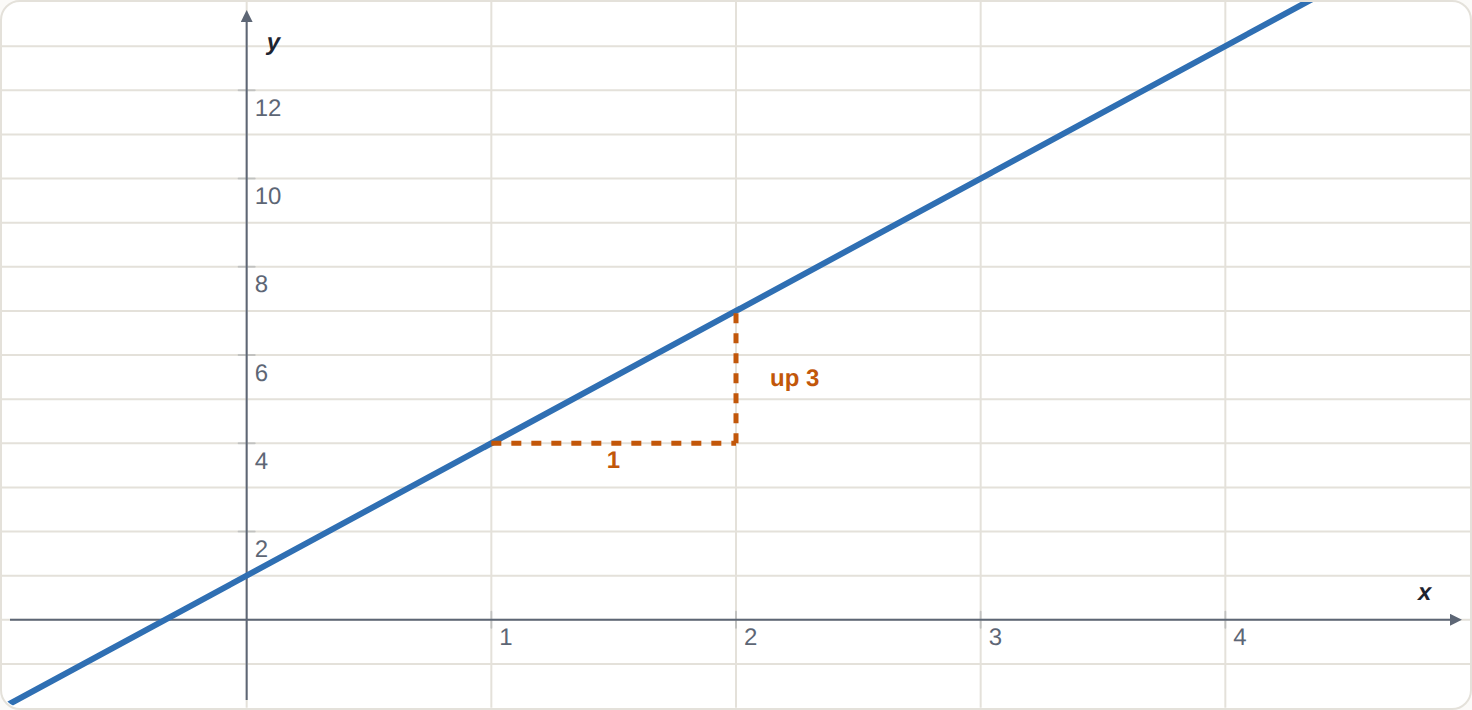
, the number in front of : one step right, the line goes up (down when is negative). A bigger is steeper; is flat.
Linear relations · The words and methods from the lessons, with an example of each.
, the number in front of : one step right, the line goes up (down when is negative). A bigger is steeper; is flat.
One letter: every point on has (a vertical line); every point on has (horizontal).
, the number on its own: where the line crosses the -axis (at ). Changing moves the line up or down without changing its steepness.
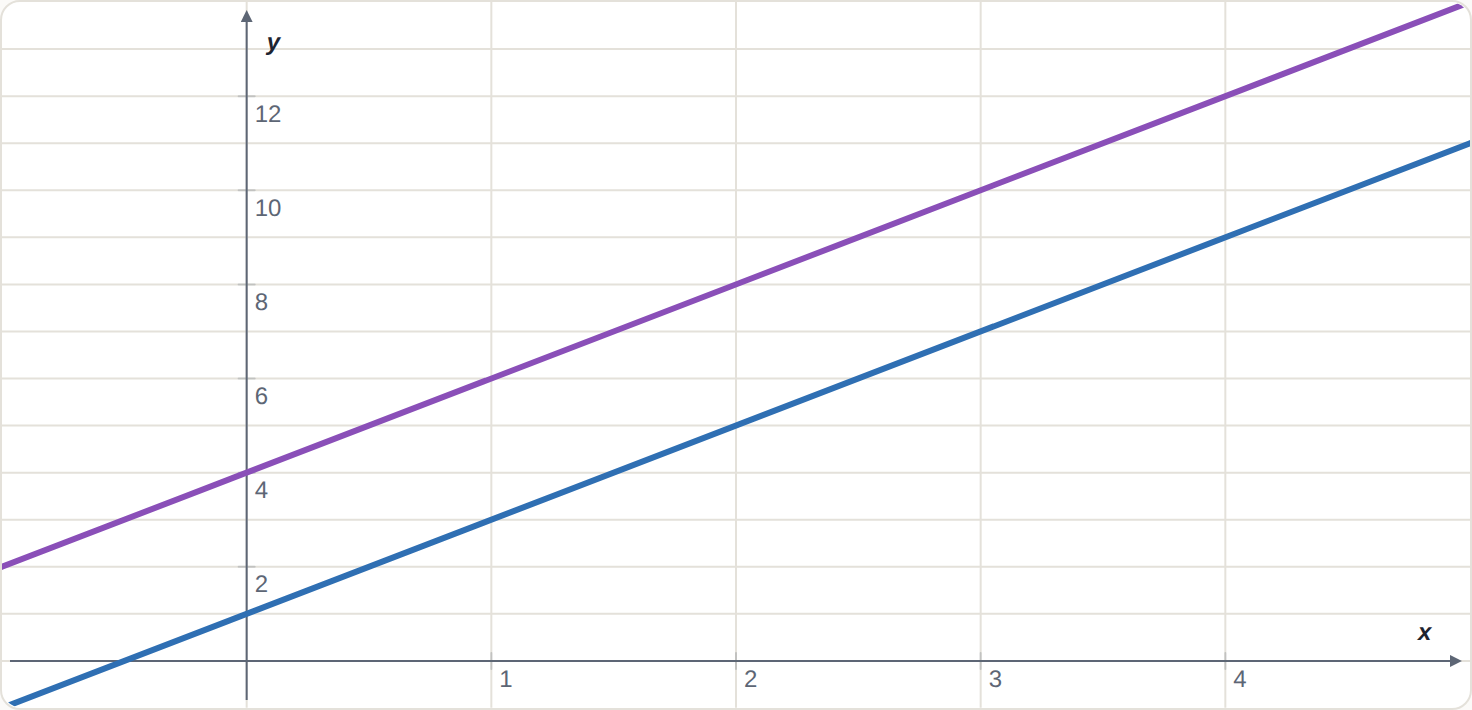
The same gives the same steepness, so the lines never meet. is moved up 3.
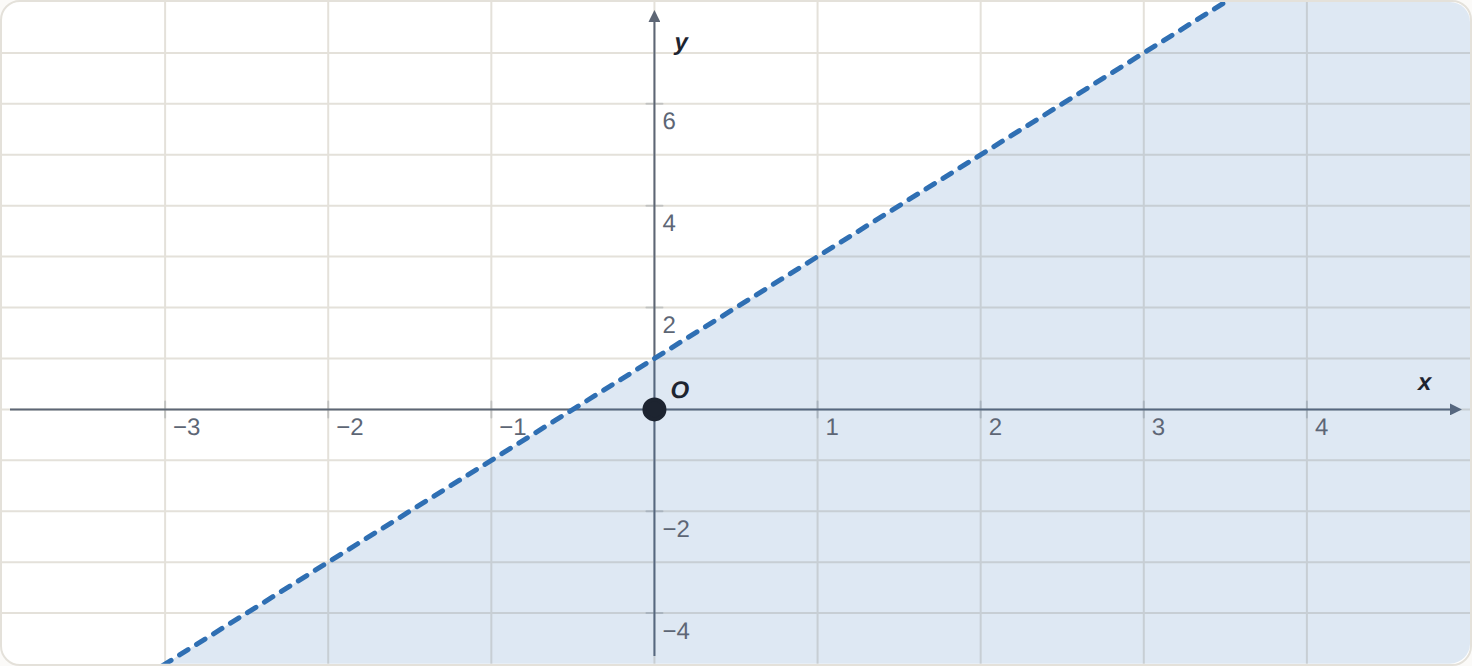
Draw the boundary : dashed for and , solid for and . Test a point such as : true, shade its side; false, the other side.