← Year 8 Chemistry

Year 8 Chemistry: recap

Answer each question in your head or on paper first, then check it.

Elements and compounds

1. What are particles made of?

Try firstWhat makes gold a different element from silver?

Check your answer

Gold is made of a different type of atom from silver. Atom type decides the element.

The particles in the particle model are atoms, or atoms joined together. Atoms come in about 118 types, one for each element.

  • All atoms of one element are the same type.
  • Atom type decides what element a substance is.
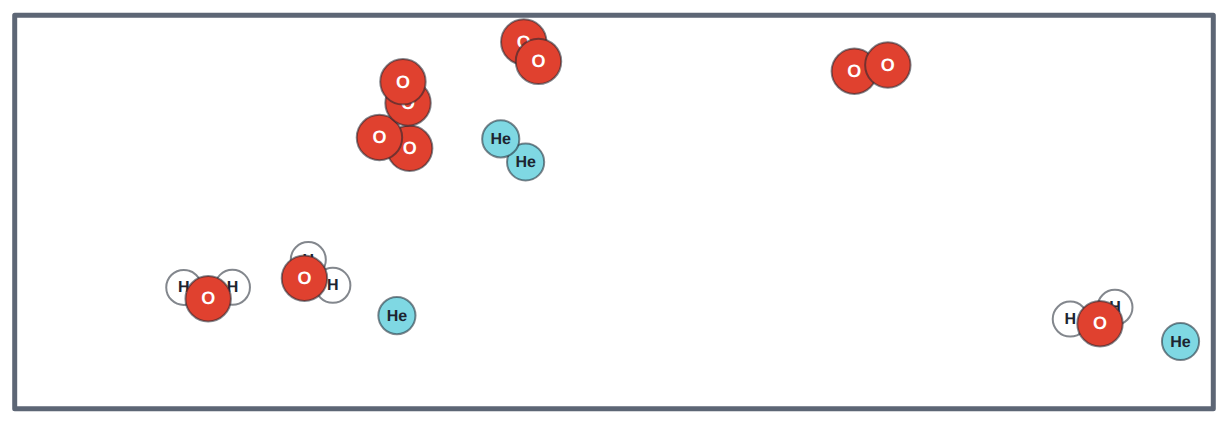
  • An element can be single atoms (helium) or atoms of one type joined (oxygen, O₂).
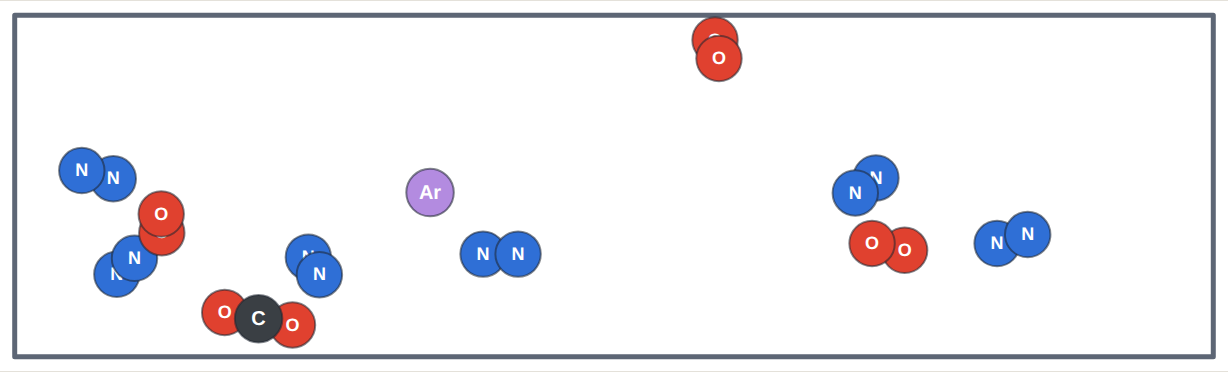
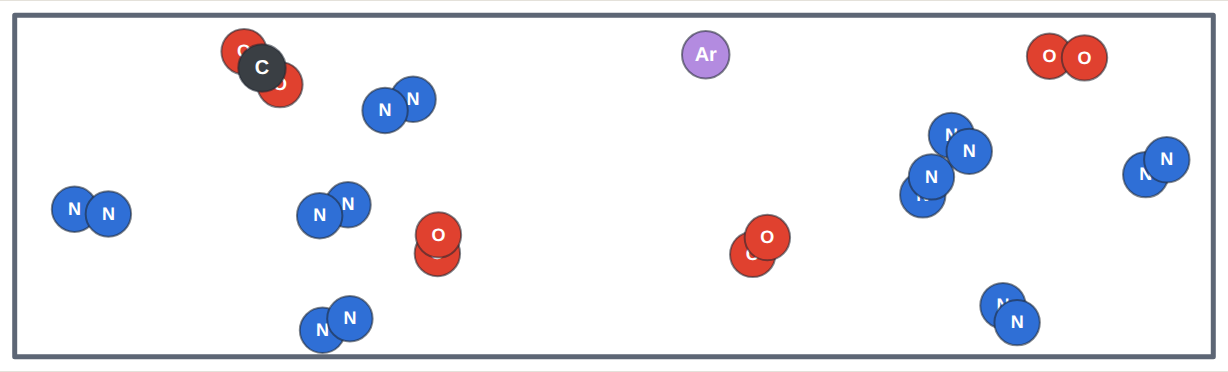
Air zoomed in: nitrogen and oxygen molecules (two atoms each), a single argon atom and carbon dioxide.
Atoms and elements · Sound on for the voiceover
Open the lesson →

2. What is an element?

Try firstNitrogen gas is N₂ and ammonia is NH₃. Which is an element, and how can you tell from the formula?

Check your answer

Nitrogen: only one symbol (N), so one type of atom. Ammonia has two symbols (N and H): a compound.

An element is a pure substance made of only one type of atom. Its particles can be single atoms (helium, He) or atoms joined together (oxygen, O₂), as long as every atom is the same type.

Each element has a symbol: a capital letter, or a capital and a small letter (Co is cobalt; CO is carbon monoxide, a compound). The periodic table lists them all.

Oxygen (O₂) and helium (He): one type of atom each, so elements. Water (H₂O) has two types: a compound.
Elements · Sound on for the voiceover
Open the lesson →

3. Why isn't salt poisonous?

Try firstIs carbon dioxide (CO₂) an element, a compound or a mixture? Why?

Check your answer

A compound: carbon and oxygen atoms are chemically joined in a fixed ratio, 1 carbon to 2 oxygen.

A compound is two or more types of atom chemically joined in a fixed ratio. It is a new substance with new properties.

  • A mixture has substances together but not joined; each keeps its properties.
  • A formula lists the atoms in one particle: H₂O has 2 hydrogen and 1 oxygen.
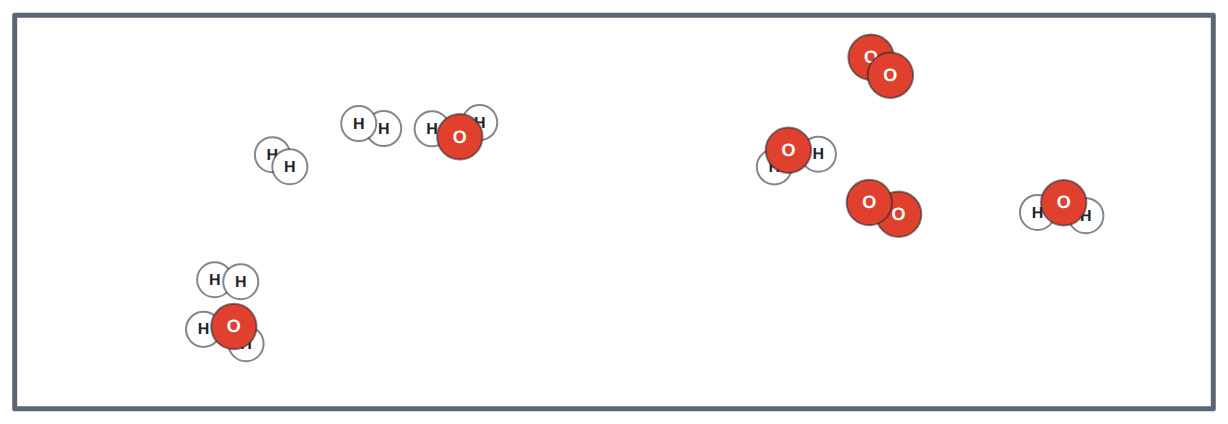
Hydrogen and oxygen (elements: one type of atom each) mixed with water (a compound: H₂O, always two H to one O).
Elements and compounds · Sound on for the voiceover
Open the lesson →

4. Mixed, not joined?

Try firstIron and sulfur are mixed, then heated to make iron sulfide. Which is the mixture and which the compound, and how could you tell with a magnet?

Check your answer

Before heating: a mixture (a magnet pulls out the iron). After: iron sulfide, a compound (the iron is joined to sulfur, so a magnet can't pull it out).

A mixture is two or more substances mingled together but not chemically joined. Each keeps its own properties, the amounts can vary, and the parts can be separated by physical means.

A compound has different atoms joined in a fixed ratio, with new properties. Air and salt water are mixtures; water and carbon dioxide are compounds.

Air: nitrogen, oxygen, argon and carbon dioxide particles mixed together, not joined. A mixture.
Mixtures · Sound on for the voiceover
Open the lesson →

5. Symbols, formulas or models?

Try firstHow many atoms of each element are in 2NH₃?

Check your answer

2 nitrogen and 6 hydrogen (each NH₃ has 1 N and 3 H, and there are 2 particles).

A symbol names an element; a formula (H₂O) gives the types of atom and how many of each; a structural formula shows which atoms are joined; a model shows the shape.

The small number counts the atom just before it; a big number in front counts particles. Each representation shows something the others don't.

Water (H₂O), carbon dioxide (CO₂) and methane (CH₄) as ball models: each formula tells you which atoms, and how many.
Representations · Sound on for the voiceover
Open the lesson →

Chemical change

6. Same particles, new look?

Try firstWax melts on a candle and drips. Use particles to explain why this is a physical change.

Check your answer

The wax particles move from fixed positions to sliding past each other, but each particle is still wax: no new substance, so physical.

In a physical change (melting, boiling, dissolving) the particles change how they are arranged, how far apart they are and how fast they move. Every particle stays the same, so no new substance is made.

Steam is still water particles; dissolved salt is still salt. The number of particles, and so the mass, stays the same.

Steam: the same water particles (H₂O) as ice and liquid water, just moving fast and far apart.
Physical change · Sound on for the voiceover
Open the lesson →

7. Is it a new substance?

Try firstIs rusting physical or chemical? How do you know?

Check your answer

Chemical: rust (iron oxide) is a new substance with different properties from iron.

A chemical change makes a new substance: the atoms separate and join into new particles. A physical change keeps the same particles; only their arrangement or spacing changes.

The test is "is there a new substance?". "Can it be reversed?" is only a clue: dissolving salt can be reversed and is physical.

Hydrogen and chlorine molecules: when they collide hard enough, the atoms rearrange into hydrogen chloride.
Chemical change · Sound on for the voiceover
Open the lesson →

8. How can you tell a reaction happened?

Try firstBicarb and vinegar fizz and the mixture gets colder. Name two signs of a chemical change, and say what would prove it.

Check your answer

Gas given off (fizzing) and a temperature change. A new substance would prove it (carbon dioxide, which turns limewater cloudy).

Signs of a chemical change: a colour change, a gas given off, a solid forming in a liquid (a precipitate), light, a smell, or a temperature change.

Each is a clue, not proof: boiling water bubbles with no new substance. The test is whether a new substance formed.

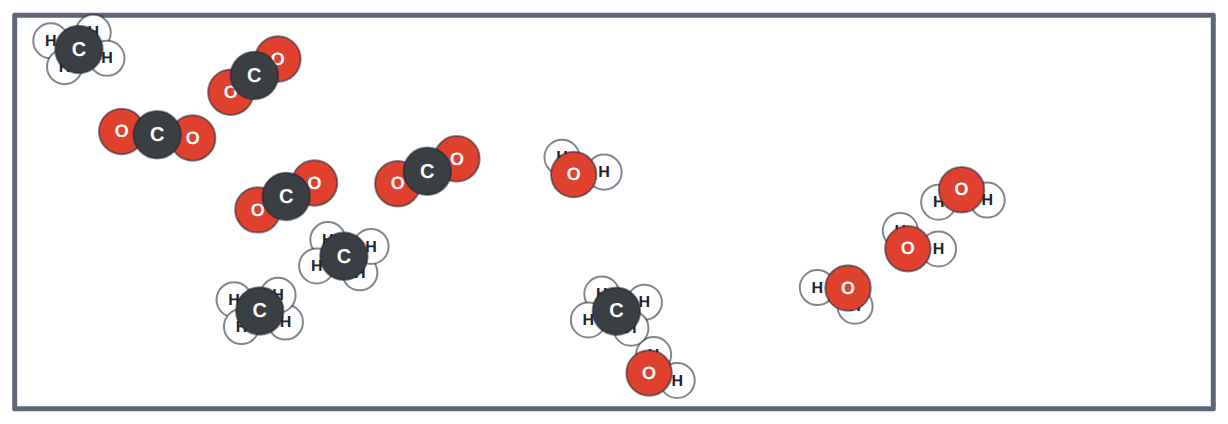
Methane and oxygen reacting. The signs you could observe: a gas given off, heat and light.
Signs of a chemical change · Sound on for the voiceover
Open the lesson →

9. Hotter or colder?

Try firstBurning candle wax: exothermic or endothermic? Explain using the word surroundings.

Check your answer

Exothermic: the reaction gives out energy to the surroundings, which get hotter (and light is given out).

Exothermic reactions give out energy to their surroundings, which get hotter: burning, respiration, hand warmers.

Endothermic reactions take in energy from their surroundings, which get colder: instant ice packs, photosynthesis. Energy moves; it is never made or destroyed.

Hydrogen and oxygen reacting: each reaction gives out energy, so the particles speed up and the temperature rises. Exothermic.
Exothermic and endothermic · Sound on for the voiceover
Open the lesson →

10. Physical or chemical? Use all the clues

Try firstA student says 'it fizzed, so it was chemical'. Give one case where fizzing is not chemical and say what to check instead.

Check your answer

Boiling water fizzes with steam, a physical change. Check whether a new substance was made.

Ask first: is a new substance made? Then use the clues, and remember that one clue can mislead. Several clues pointing the same way give more confidence.

Open the lesson →