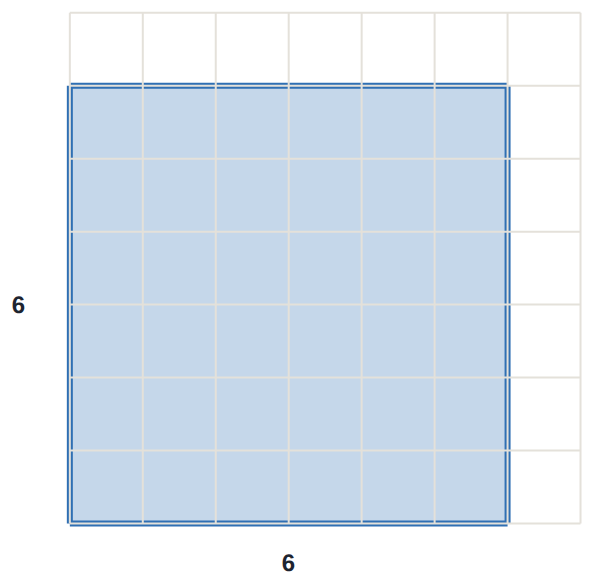
square number
A number times itself: the area of a square with that side. The perfect squares to 144: 1, 4, 9, 16, 25, 36, 49, 64, 81, 100, 121, 144.
Number Foundations · The words and methods from the lessons, with an example of each.
A number times itself: the area of a square with that side. The perfect squares to 144: 1, 4, 9, 16, 25, 36, 49, 64, 81, 100, 121, 144.
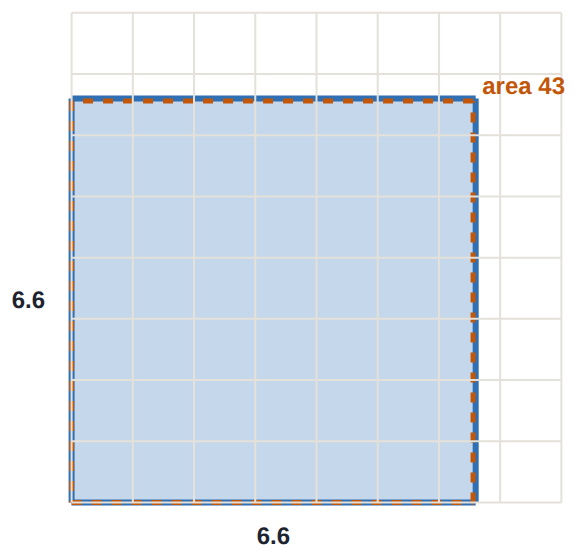
Find the perfect squares either side and take their roots. Square decimals to get closer: , so .
HCF: the primes both share. LCM: all the primes, shared ones once. Sharing into equal groups needs the HCF; things lining up again need the LCM.
The number that times itself makes this one: the side of a square with that area. Not half: .
The base (2) is multiplied; the exponent (5) counts how many times. is not .
A number with exactly two factors, 1 and itself. 1 is not prime.
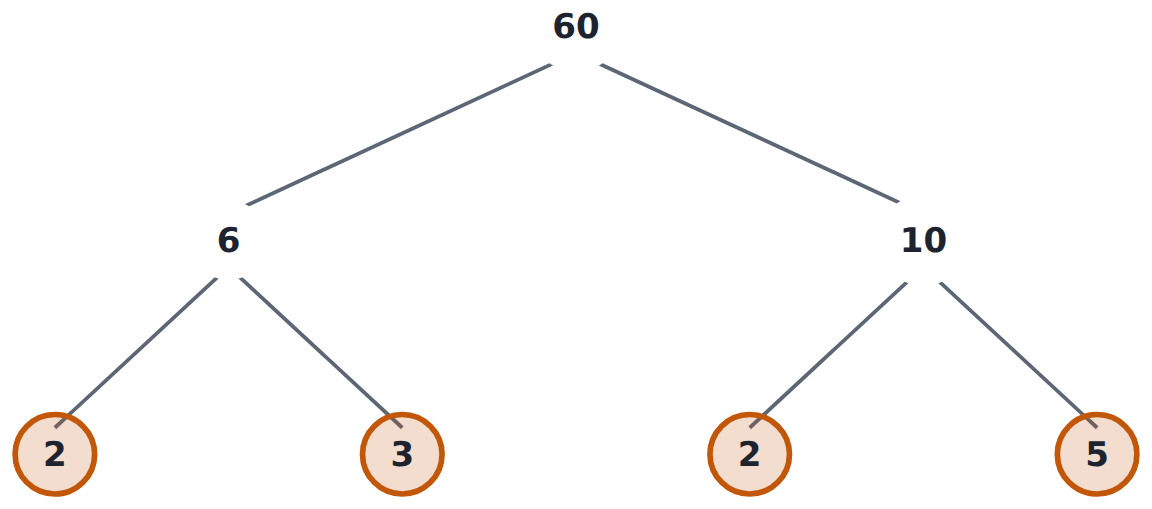
Split into factor pairs until every branch is a prime, then write repeated primes with exponents. Every tree gives the same primes.