Number Foundations · The words and methods from the lessons, with an example of each.
mixed numeral
A whole number and a fraction. A negative one is both parts below zero: one and a half below zero.
−121=−1.5
simplest form
Divide the top and the bottom by their highest common factor. In simplest form (lowest terms) they share no factor but 1.
1812=18÷612÷6=32
fraction to percentage
Percent means out of 100: make the fraction out of 100, or work out the decimal and multiply by 100.
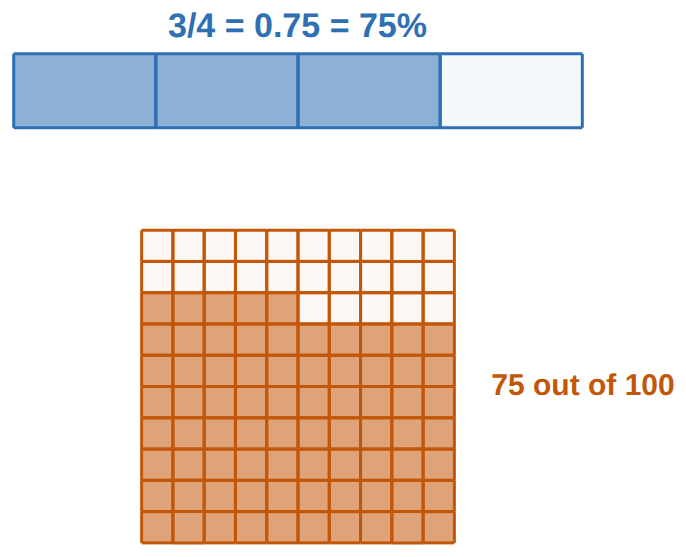
43=10075=75%
3/4 of the bar is 75 of 100 squares
adding fractions
Cut both into the same parts first (a common denominator; the LCM is the lowest), then add the tops. Never add the bottoms.
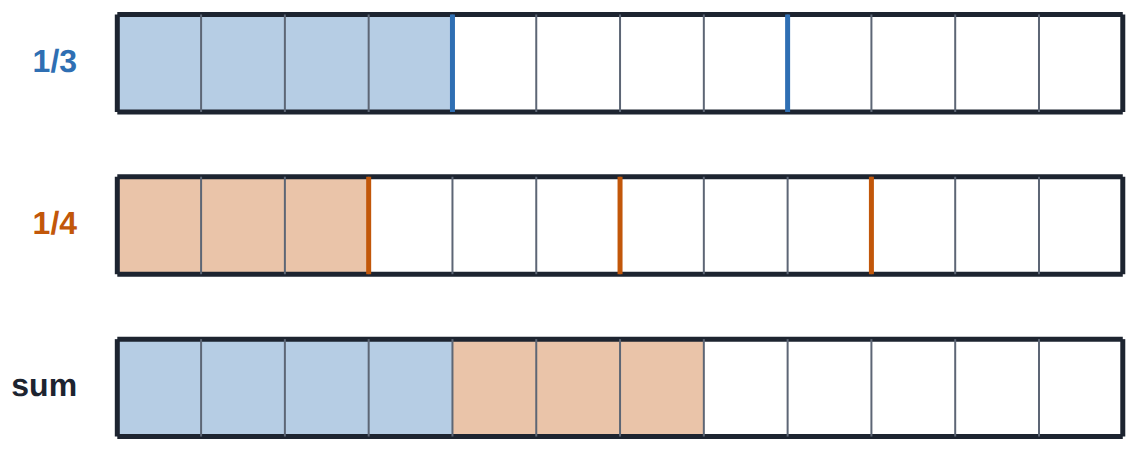
31+41=124+123=127
Thirds and quarters both cut into twelfths: 4 + 3 = 7 twelfths
dividing by a fraction
How many fit? Dividing by a fraction is multiplying by it flipped (top and bottom swapped): 32÷61=32×6=4.
3÷41=3×4=12
increase and decrease
15% off leaves 85%: × 0.85. 15% on makes 115%: × 1.15. For what percentage, divide and × 100: 18÷24=75%.
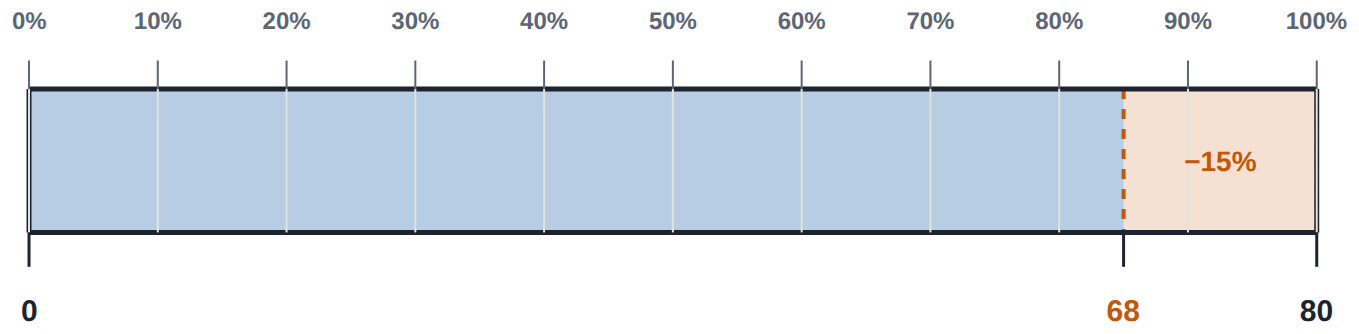
80×0.85=6880×1.15=92
15% off 80 leaves 68
placing a negative fraction
Split each unit into equal parts and count from zero. A negative counts left, and the part counts further from zero, not back towards it.
−141 is between −2 and −1
Quarters: A at −1 1/4, B at −3/4
equivalent fractions
Multiply (or divide) the top and the bottom by the same number: the same amount, cut into more (or fewer) parts. Adding the same number to both changes the amount.
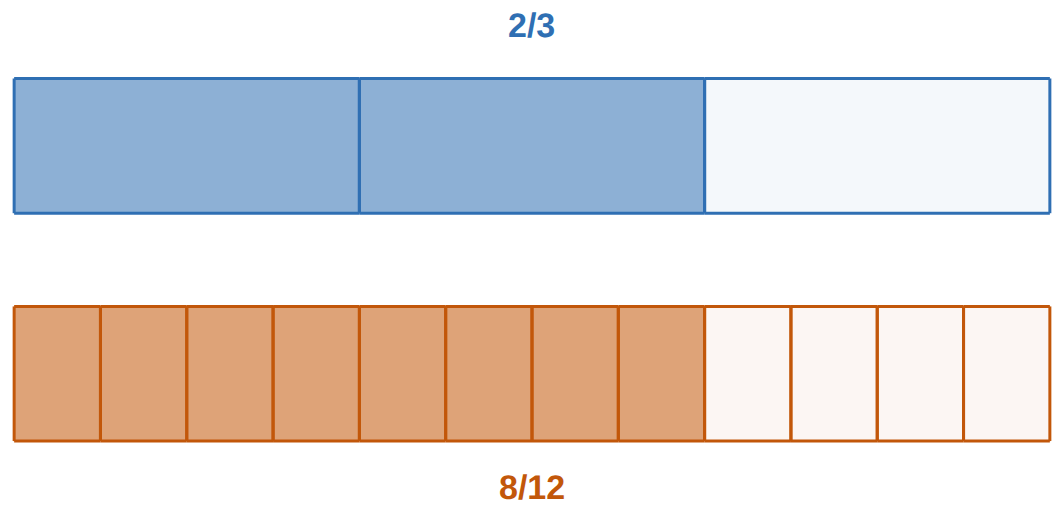
32=3×42×4=128
2/3 and 8/12 shade the same amount
fraction to decimal
Divide the top by the bottom. Some never end: 31=0.333…
83=3÷8=0.375
decimal and percentage
Decimal to percentage: × 100 (0.5 is 50 hundredths, not 5%). Percentage to decimal: ÷ 100.
0.5=50%45%=0.45
percentage to fraction
Put it over 100, then simplify.
16%=10016=254
multiplying fractions
Multiply the tops and the bottoms, then simplify. Multiplying by a fraction less than 1 makes smaller.
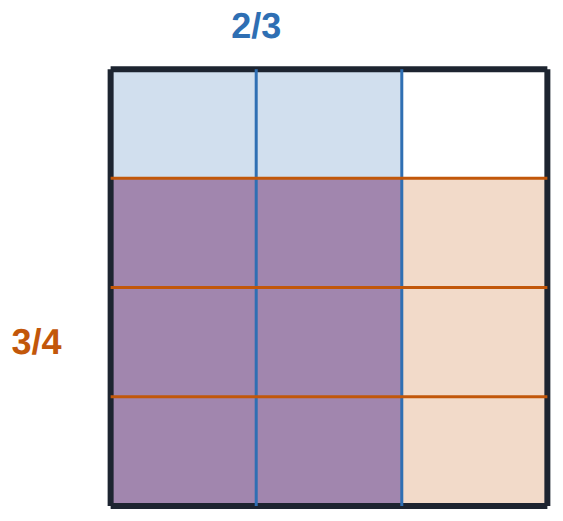
32×43=126=21
3/4 of 2/3 of a square: 6 of 12 parts
percentage of an amount
Of means multiply. Mentally: 10% is a tenth (8), 5% is half of that (4).
15% of 80=0.15×80=12
15% of a bar of 80 is 12
quick strategies
Change the order (4×2.7×25=100×2.7), change the form (0.75 = 3/4), or split (12×2.5=24+6). Then estimate to check.
0.75×36=43×36=27
negative fractions and decimals
The integer sign rules hold for every fraction and decimal. Sign first, then size.
−43×52=−103
efficient order
Multiply in any order, pairing friendly numbers; or split a number: 6×(−2.5)=6×(−2)+6×(−0.5).