integer
A whole number, zero, or a negative whole number.
Number Foundations · The words and methods from the lessons, with an example of each.
A whole number, zero, or a negative whole number.
The wide end of the sign faces the greater number. Further left on the line is less.

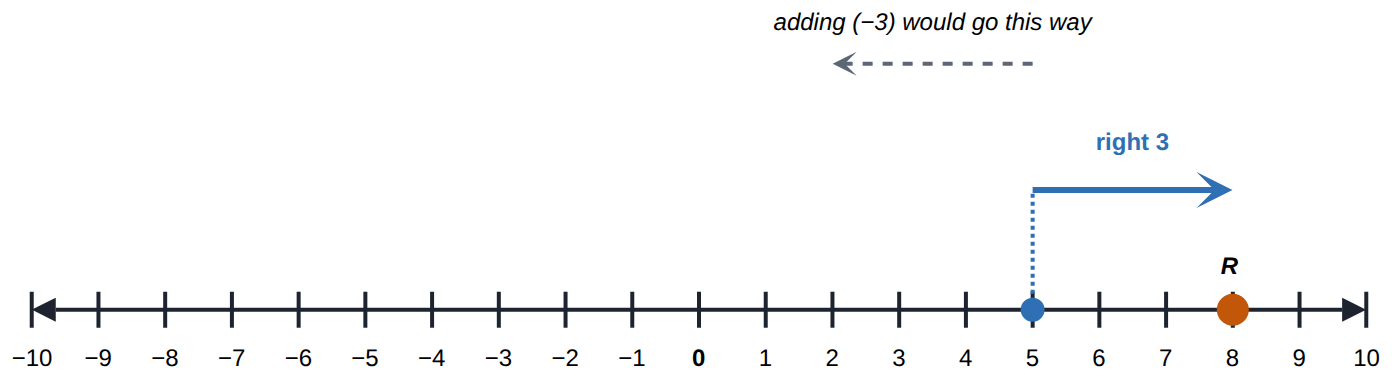
Subtracting moves the opposite way to adding: subtracting a positive moves left, past zero if it has to.
Adding would move left 3, so subtracting it moves right 3. It gives the same as adding .
The same sign rule as multiplying, because dividing undoes it: check .
A number below zero, to the left of on a number line: five below zero.
The size of a number without its sign. Among negatives, the one further from zero is the lesser: .
Start at the first number. Adding a positive moves right; adding a negative moves left.

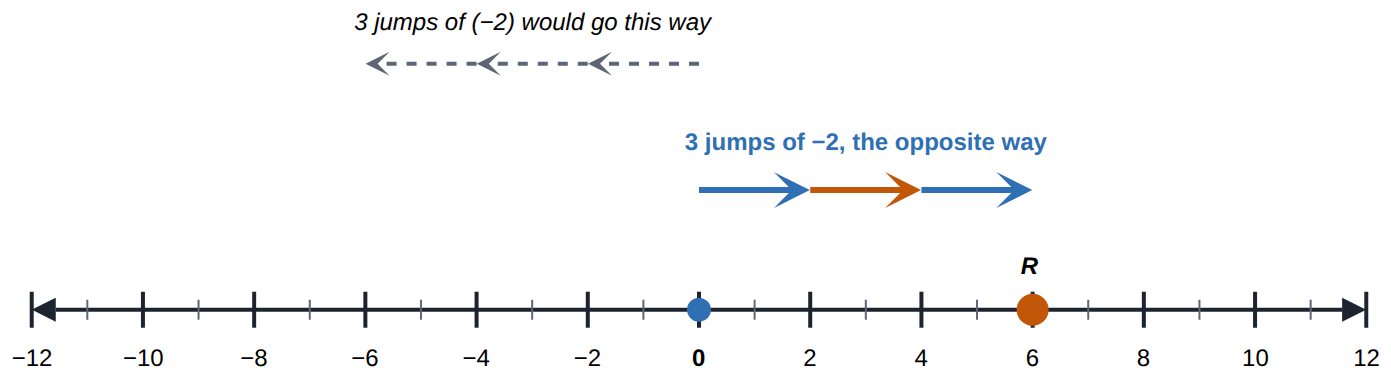
Same signs give a positive, different signs a negative. On the line: jumps of ; a negative number of jumps goes the opposite way.