growing pattern
What each new figure adds goes in front of ; what is there at the start goes on its own. Figure 4 has sticks.

Linear relations · The words and methods from the lessons, with an example of each.
What each new figure adds goes in front of ; what is there at the start goes on its own. Figure 4 has sticks.
Input first, then output. To plot it: across 2 on the -axis, then up 5.

A rule turns each input into an output . Put the input in for : gives .
Choose inputs, work out each output from the rule ( here), and write them in pairs.
Find the value you know on its axis, go to the line, then read across to the other axis. Sections of a graph increase, decrease or stay constant.
To see what one letter does, change only that letter and keep the others the same. Record the results in a table.
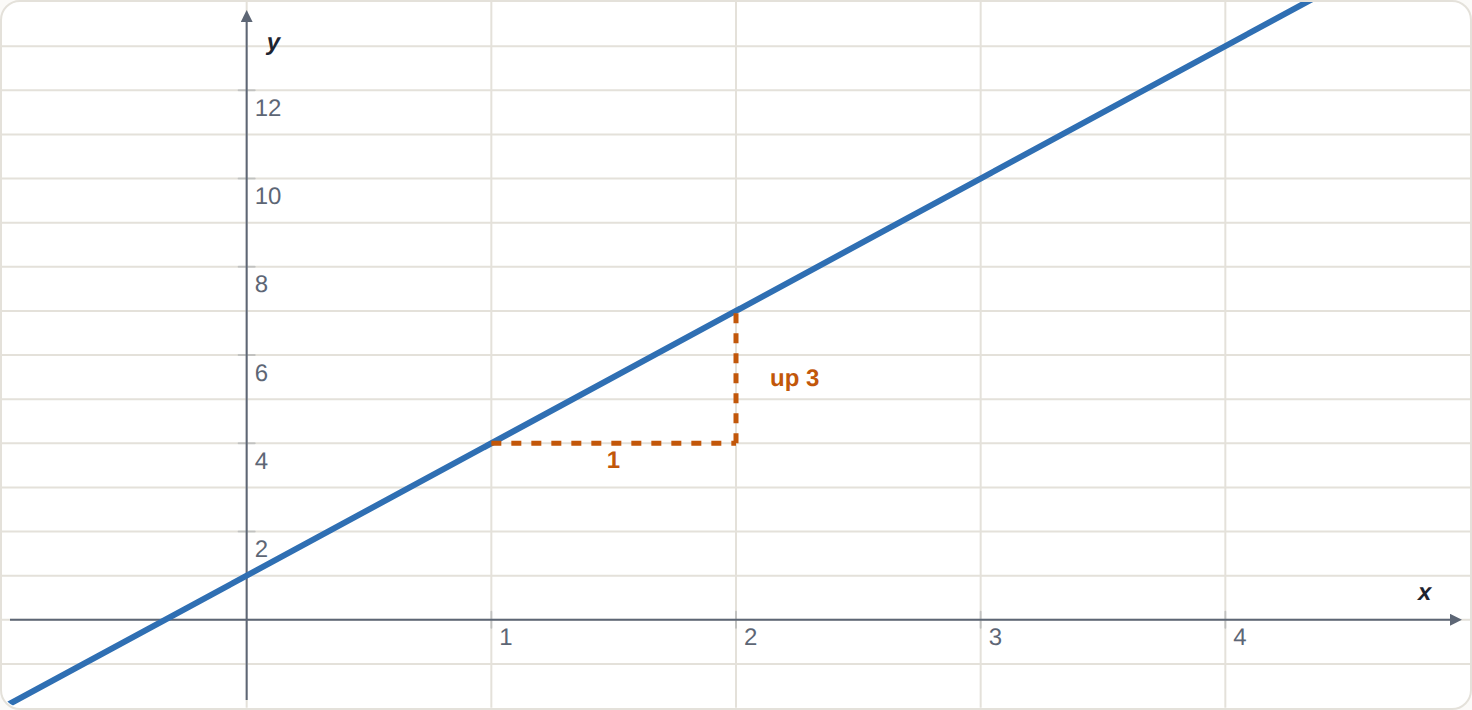
, the number in front of : one step right, the line goes up (down when is negative). A bigger is steeper; is flat.
One letter: every point on has (a vertical line); every point on has (horizontal).
, the number on its own: where the line crosses the -axis (at ). Changing moves the line up or down without changing its steepness.
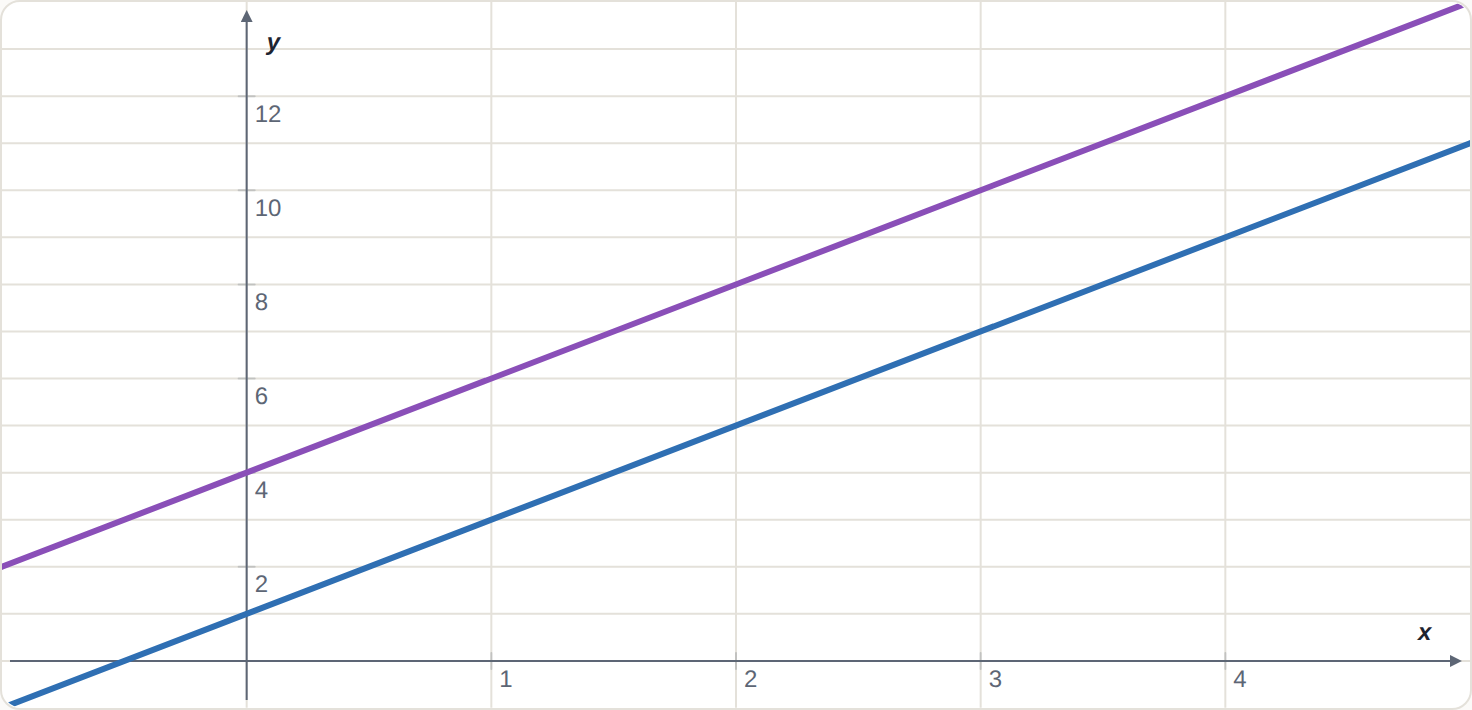
The same gives the same steepness, so the lines never meet. is moved up 3.
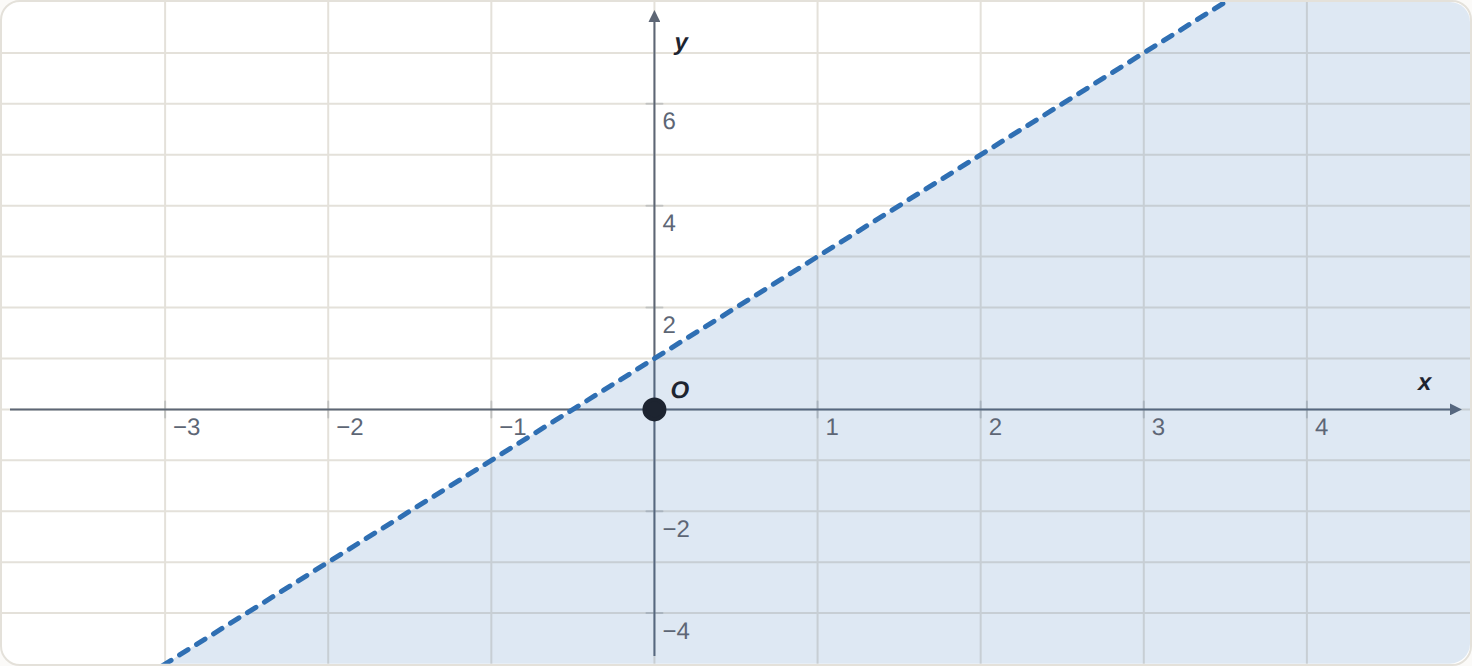
Draw the boundary : dashed for and , solid for and . Test a point such as : true, shade its side; false, the other side.
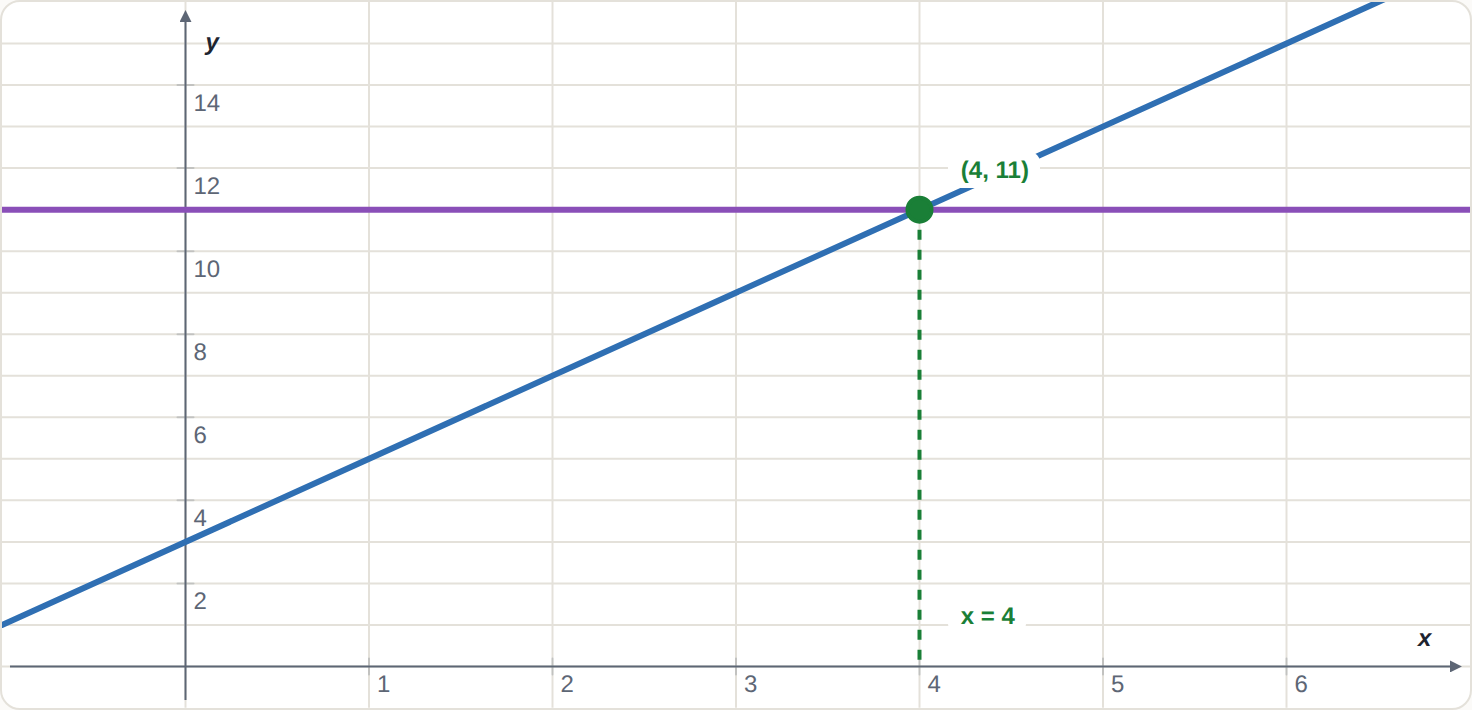
Draw each side as a line: and . Where they meet, both sides are equal, so the there is the solution.
A starting amount plus a rate: the start is (4 dollars to get in) and the rate is (2 dollars per km).
Put both rules on one graph. Where the lines cross, the plans cost the same; on either side, the lower line is cheaper. Check where the model makes sense (no negative gigabytes).