formula
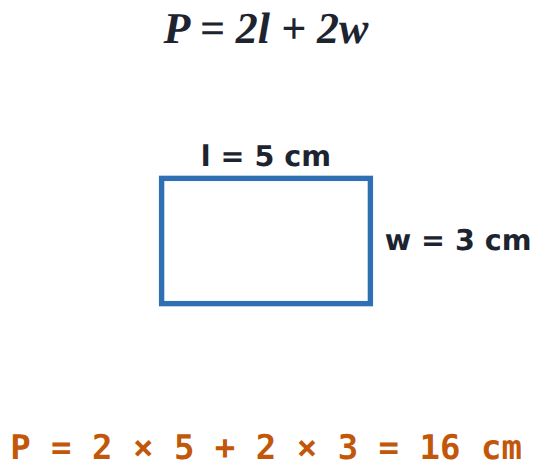
A rule that gives one quantity from others, written with letters. This one gives the perimeter of a rectangle.
Algebra Foundations · The words and methods from the lessons, with an example of each.
A rule that gives one quantity from others, written with letters. This one gives the perimeter of a rectangle.
"5 more than n" is . "5 less than n" is : you start from and take 5 away, so comes first.
With , is 8, not 24.
Replace each letter with its value, write in the × signs, then work it out: brackets, then × and ÷, then + and −.
A letter for a quantity that can change. Each rectangle has its own , and .
A number that stays the same, such as a 20 dollar call-out fee. is a constant too.
In an equation, a letter can stand for one particular number: here only works.
Brackets keep a part together so it is worked out first. "Add 3, then double the result" is ; "double, then add 3" is .
Say what the letter stands for (a number that changes), multiply it by the amount for each one, then add anything paid once.
Substitute what you know, then solve the equation that is left by undoing. Check by substituting back.
A calculation with a letter in it. It has a value once you know the letter, but it does not say that anything is equal.
The value of the letter that makes the equation true.
Each step has an opposite that undoes it: adding and subtracting, multiplying and dividing.
Undo the steps done to with their opposites, last step first.

Take the same number of from both sides first, so the bags are on one side only.
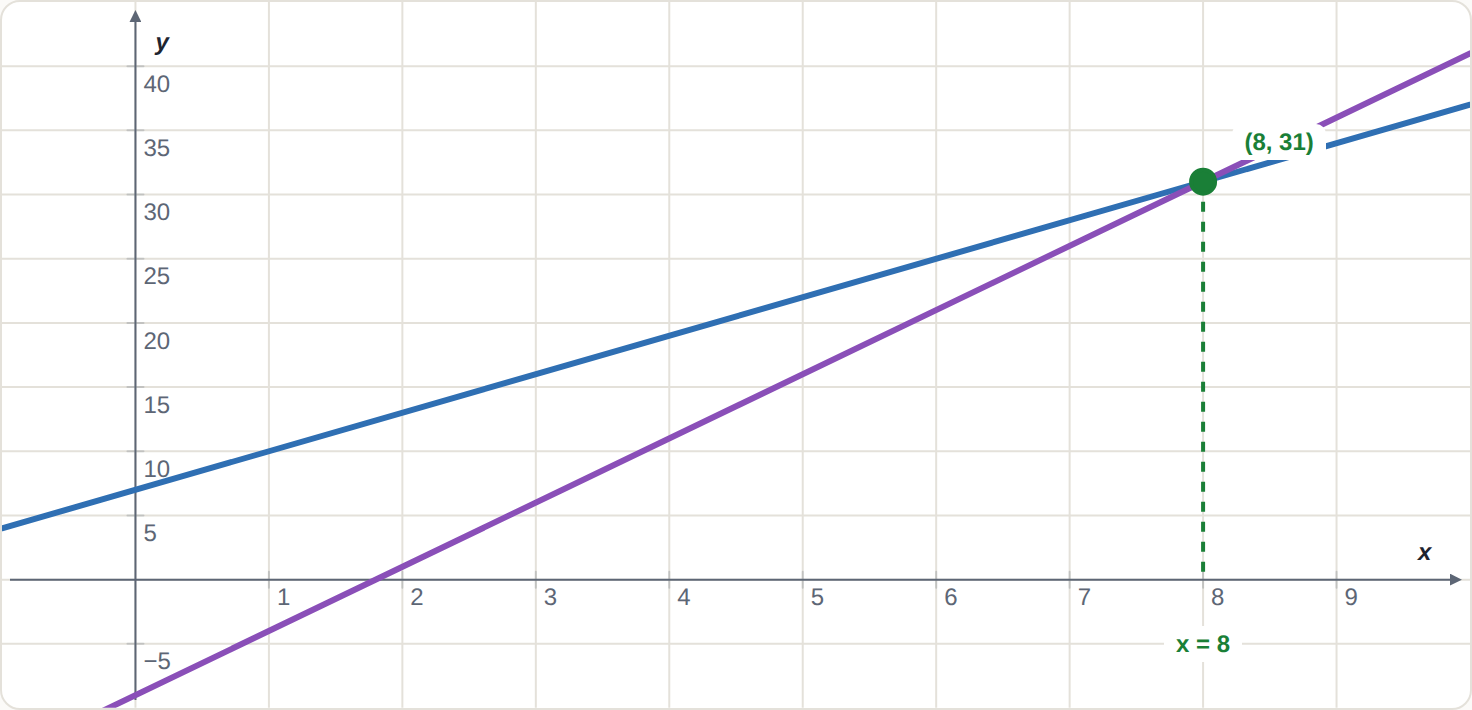
Two expressions with = between them: a statement that they are equal, like a balanced scale.
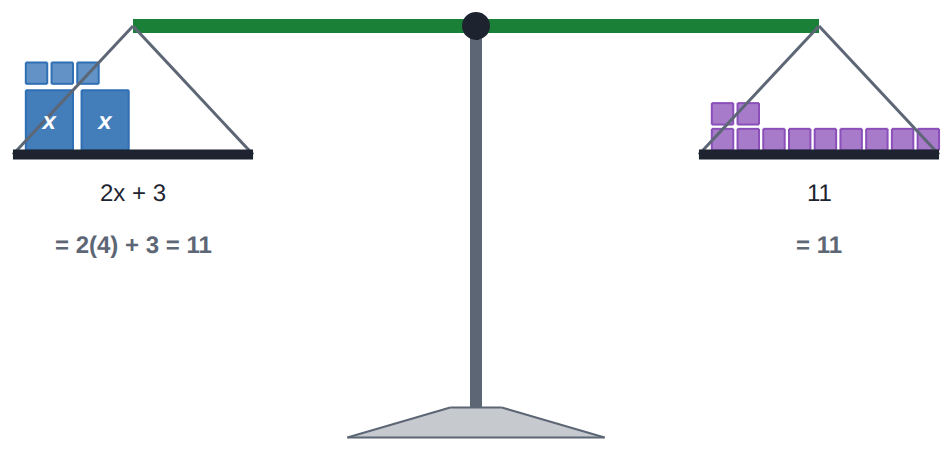
Put the value in place of the letter and work out both sides. If they match, it is a solution. Check every answer in the first equation.
Do the same to both sides (take away, or share into equal groups) until is on its own.
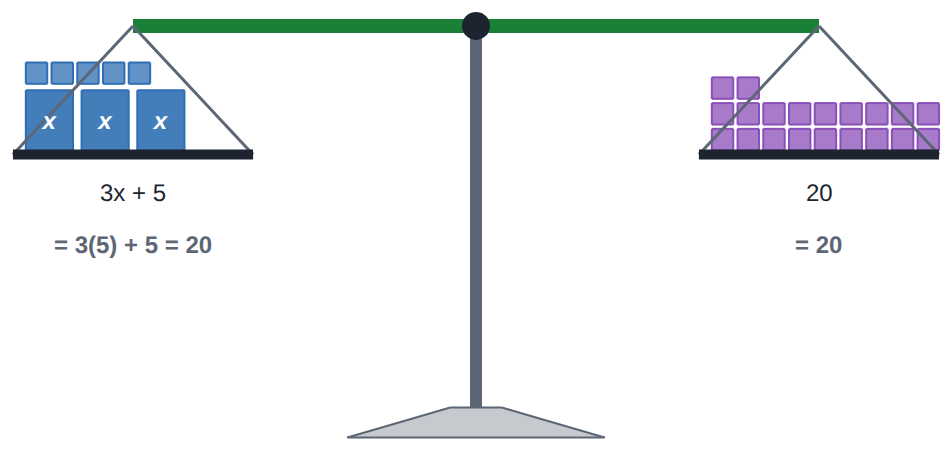
Multiply every term inside the bracket by the number outside. Signs come too: .
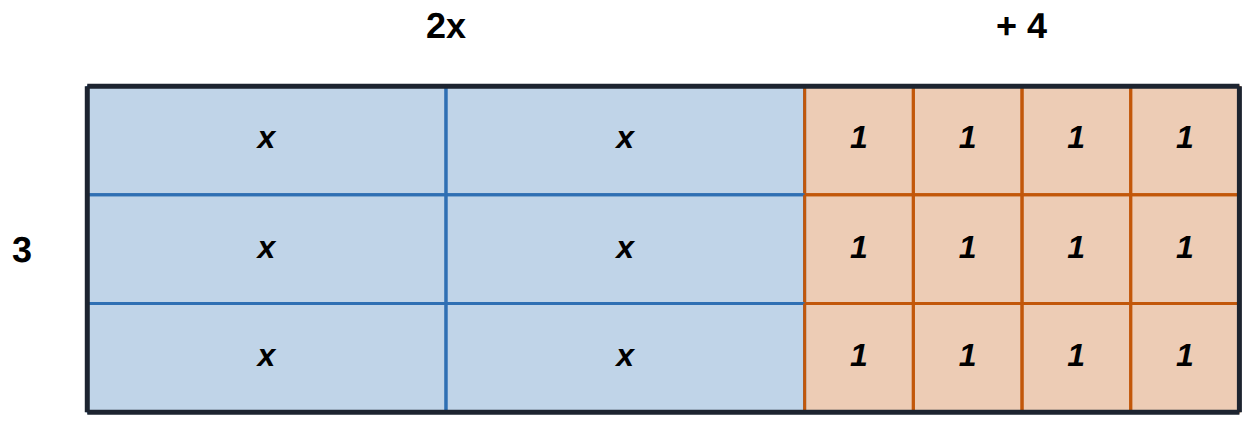
Undo what was done to the letter, last step first, doing the same to both sides. Check by putting in numbers: gives , and .
Terms with the same letters and powers can be added: . Collect them after expanding.
A negative outside flips the sign of every term inside: .
Divide every term by the highest common factor and put it outside: , and . Check by expanding.
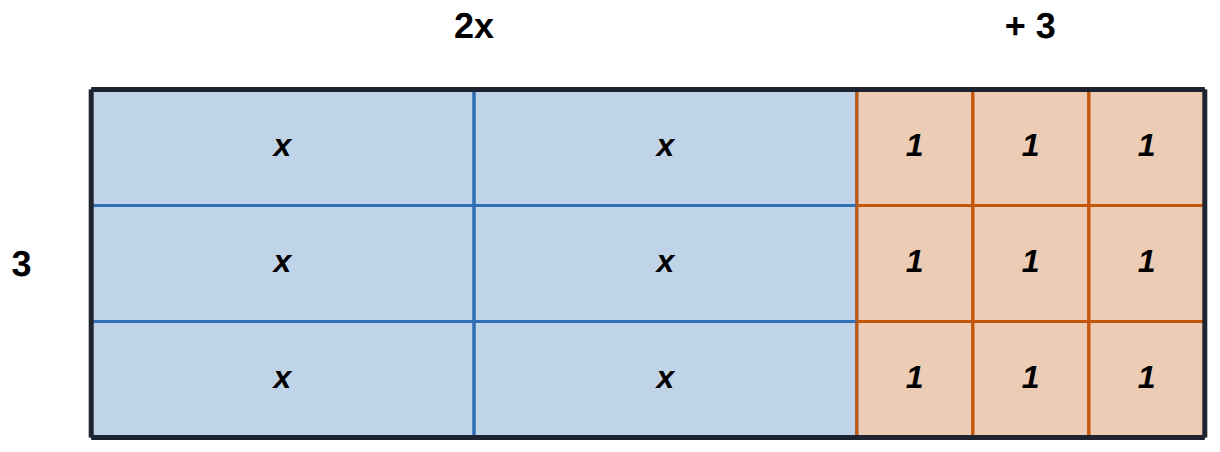
Expand any brackets. Take the smaller term from both sides, undo the numbers with the inverse (add to undo ), then divide.
Put the answer into both sides of the first equation. Equal sides: right. Unequal: look for the first step that went wrong.
Do the same to both sides, as for an equation. Multiplying or dividing by a negative **reverses** the sign ( but ). Check a value from your answer.
Open circle for and (the end is not included), closed for and ; shade towards the solutions.
