← Year 9 Earth and space

Year 9 Earth and space: recap

Answer each question in your head or on paper first, then check it.

The carbon cycle

1. What are Earth's spheres?

Try firstName the four spheres and give one example of something where two of them meet.

Check your answer

Atmosphere, biosphere, hydrosphere, geosphere. For example, soil (geosphere and biosphere) or a cloud (atmosphere and hydrosphere).

Earth's spheres: atmosphere (air), biosphere (living things), hydrosphere (water), geosphere (rock, soil, magma). They overlap and interact as one system.
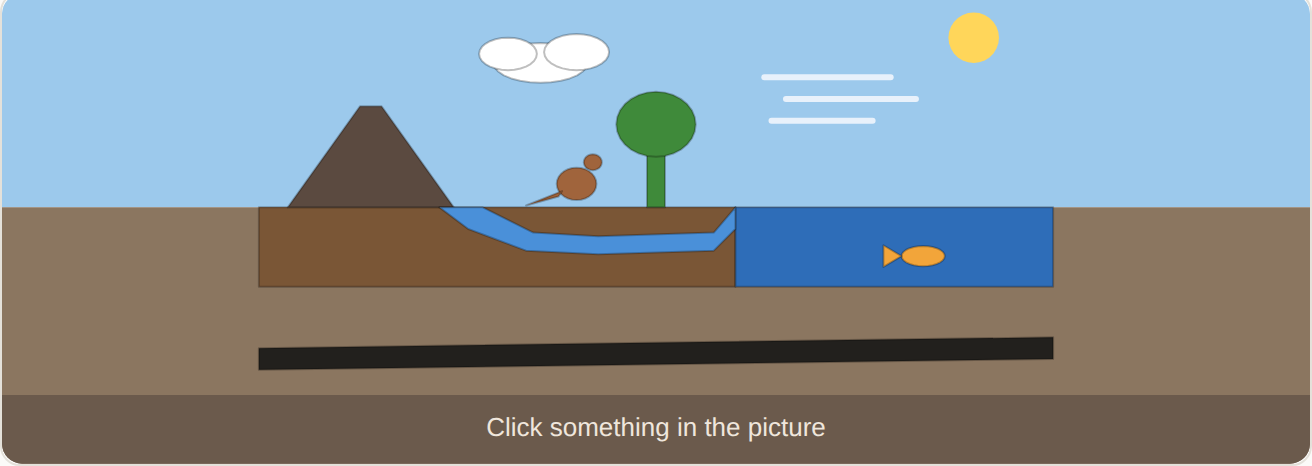
A landscape with things from all four spheres: air, living things, water and rock.
Earth's spheres · Sound on for the voiceover
Open the lesson →

2. Where is all the carbon?

Try firstName a carbon store in the hydrosphere and one in the geosphere, and one flow that moves carbon into the atmosphere.

Check your answer

Hydrosphere: carbon dioxide dissolved in the oceans. Geosphere: fossil fuels or limestone. Flow into the air: respiration, decay, burning or release from the oceans.

Carbon is stored in every sphere: carbon dioxide in the air, dissolved carbon in the oceans, living things and soil in the biosphere, and fossil fuels and rocks in the geosphere.

Carbon is never made or destroyed; it flows between stores. The carbon cycle is the map of those flows.

Carbon stores · Sound on for the voiceover
Open the lesson →

3. Where does the carbon in a tree go?

Try firstDescribe how carbon moves between the air and living things.

Check your answer

Photosynthesis takes CO₂ from the air into plants; respiration by plants, animals and decomposers returns it to the air as CO₂.

Photosynthesis moves carbon from the atmosphere into the biosphere; respiration and decomposition move it back. When these flows balance, the air's CO₂ stays steady.

Photosynthesis and respiration · Sound on for the voiceover
Open the lesson →

4. What does burning fossil fuels do to the carbon cycle?

Try firstPlants and the oceans take up about half of the CO₂ we add each year. Why does CO₂ in the air still keep rising?

Check your answer

Burning moves carbon stored in the geosphere over millions of years into the air in years. The natural flows were balanced, so the half that plants and oceans don't take up builds up, year after year.

Combustion of fossil fuels moves carbon from the geosphere, where it was stored over millions of years, to the atmosphere in years. Oceans and plants take up part of it; the rest builds up, so CO₂ in the air rises.

Burning fossil fuels · Sound on for the voiceover
Open the lesson →